How Often Should You Use Vermicompost? The Ultimate Feeding Schedule


Because vermicompost is completely organic and non-burning, it is virtually impossible to "overdose" a plant in the way chemical fertilizers cause leaf scorch. However, strategic feeding provides the best economic and horticultural results.
The Seasonal Calendar: • Spring Surge (Feb–March): Plants wake up from winter slumber. Apply a heavy top-dressing (3–4 tablespoons per container) to provide an immediate burst of microbial activity. • Monsoon Explosion (June–August): Warm rains accelerate growth and root respiration. Apply vermicompost every 3 weeks to replace nutrients leached by heavy rainfall. • Autumn Preparation (September–October): Re-enrich container beds for winter annuals, winter vegetables, and flowering chrysanthemums. • Winter Dormancy (December–January): Taper application down to once every 6 to 8 weeks.
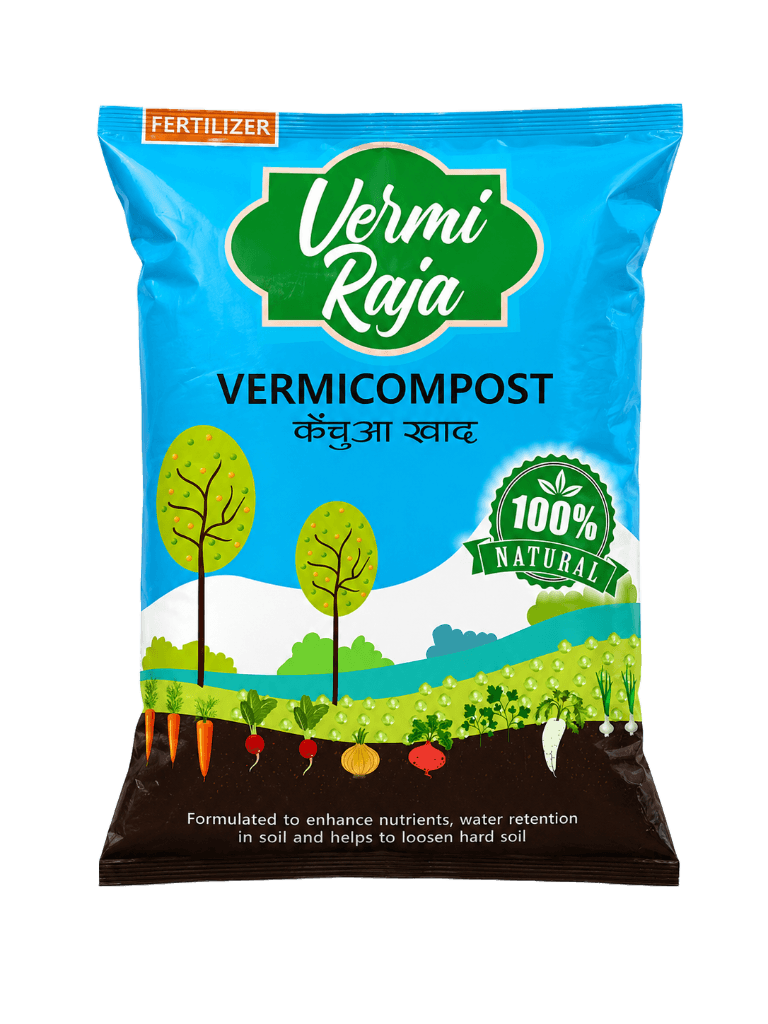
Vermi Raja Vermicompost (5 KG)
Keep a 5 KG pack on hand to follow our monthly garden maintenance calendar with zero stress.
Related Gardening Guides
Continue learning how to care for your soil and plants organically

How to Use Vermicompost: Step-by-Step Guide for Pots, Beds & Lawns
Learn how to measure, blend, and apply vermicompost without guesswork. Includes application rates for seed starters, container pots, and mature beds.
What Is Vermicompost? The Complete Guide to Black Gold for Plants
Discover how specialized earthworms transform organic matter into nutrient-dense, odourless castings packed with plant-available minerals and beneficial microbes.

10 Proven Benefits of Vermicompost for Indoor and Outdoor Plants
From aerating heavy clay soils to providing vital bio-stimulants, discover why vermicompost is the ultimate sustainable booster for any garden.